


The impact of decentralisation on urban development
The study of the emergence of the modern State and its effects on economic growth and urbanisation is a central theme in economic literature.
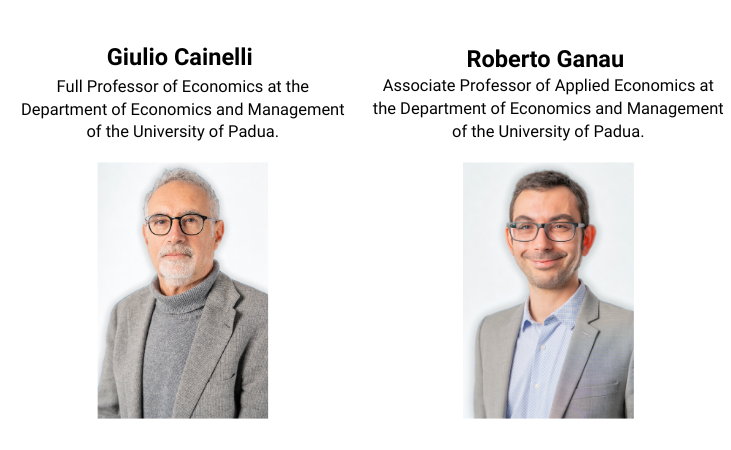
In an article published in «The Journal of Economic History», Giulio Cainelli and Roberto Ganau from the Department of Economics and Management "Marco Fanno" at the University of Padua, and Carlo Ciccarelli from the University of Rome Tor Vergata, analysed how changes in the administrative organisation of a State can influence the development of cities. Specifically, they examined the Napoleonic administrative reform of 1806 in the Kingdom of Naples to determine if district capitals, endowed with supra-municipal administrative functions, experienced greater urban development compared to non-capital municipalities.
Napoleon's Reform
The 1806 reform divided the twelve historical provinces into forty districts, intermediate units between provinces and municipalities, selecting the capitals based on criteria of territorial centrality. These centres became seats of administrative functions and represented one of the first forms of widespread State presence in continental Southern Italy, also through the deployment of officials, military personnel, and police forces to support the Sub-Intendant. The results show that district capitals experienced more intense demographic and industrial growth in the following decades compared to municipalities without supra-municipal administrative functions, as well as a greater provision of local infrastructure and public goods. Even after the abolition of districts in 1927, these municipalities continued to grow, benefiting from the transformations initiated during the French rule.
Implications for the Modern Economy
The study reveals two general insights: the presence of the State in the territory is crucial for employment and the provision of services such as infrastructure, security, and welfare; moreover, administrative decentralisation can impact urban hierarchy, influencing local development paths and the economic geography of a country.
"The analysis also presents significant national and international implications," comments Roberto Ganau. "At the national level, the recent debate on differentiated autonomy has reopened the discussion on administrative decentralisation and the forms of federalism best suited to support economic development, particularly in Southern Italy."
"From an international perspective, our work is consistent with the hypothesis underlying the processes of 'administrative urbanisation' that have received considerable attention in China following the economic reforms of 1978: the attribution of political-administrative functions to small and medium-sized cities has indeed played a crucial role in promoting urbanisation and agglomeration in numerous regions of the country," specifies Giulio Cainelli.